our story
Sivas to Pittsburgh,
the long way round.
Sultan Baklava is Sinan and Fatma Camozu's baklava, made on 6th Street in Downtown Pittsburgh. Sinan spent years driving a cab in this city before he got back to a stove, and the better part of a decade getting to the point where he could make baklava the way it is made at home — from the flour up, with nothing bought frozen.
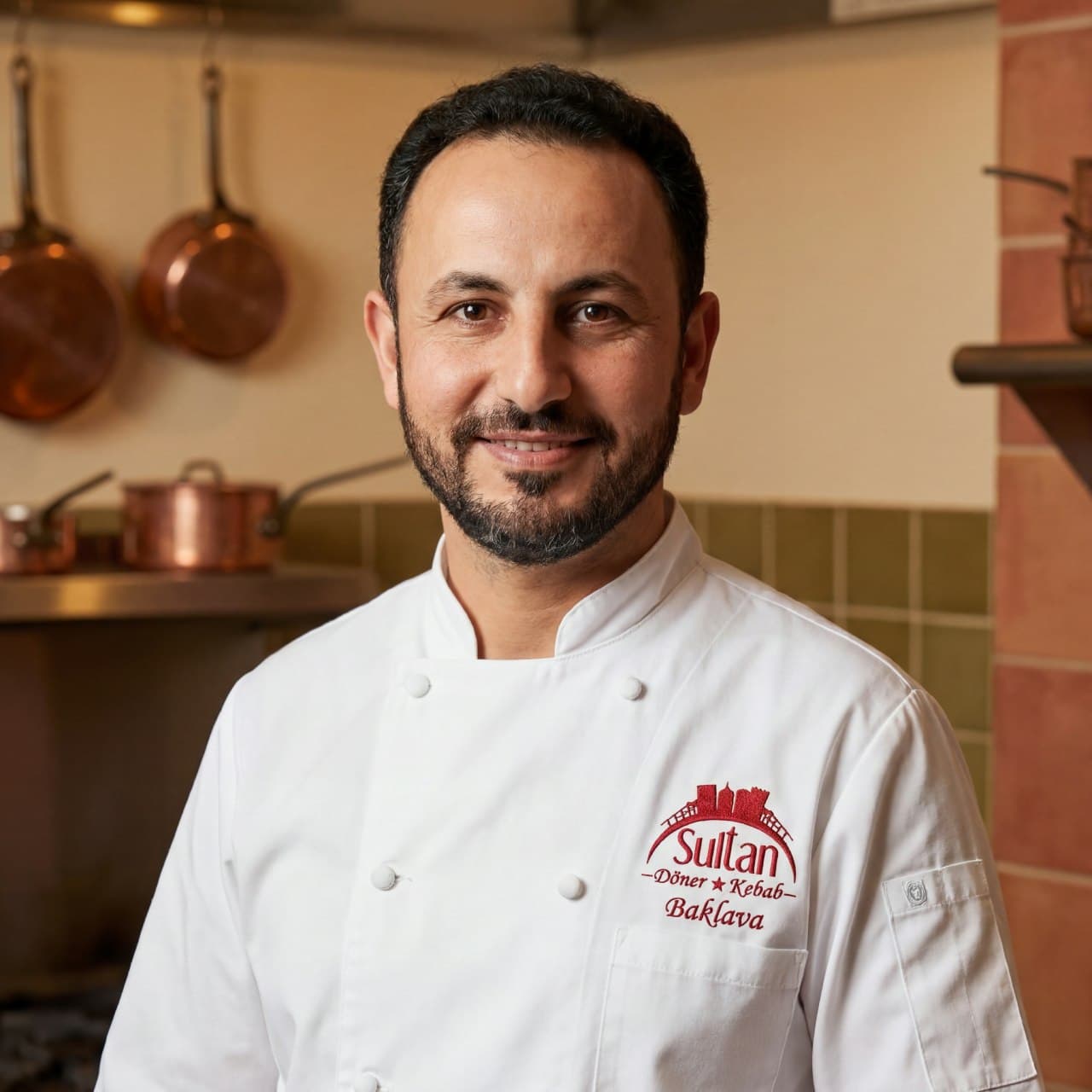
Sivas
Sinan grew up in Sivas, on the high plains of central Anatolia — a long way from the pistachio country in the south, but not from the habit of feeding people properly. The table, the welcome, and the assumption that the slow method is the correct one all came from there.
Gelibolu, then Istanbul
He took a degree in hotel management and business at Gelibolu, then learned the trade in Istanbul's hotel kitchens — the Bentley, in Nişantaşı, where he was still working in 2008 — on the line and front of house both. The cooking on one side of the door, the hospitality on the other. Both turned out to matter later.
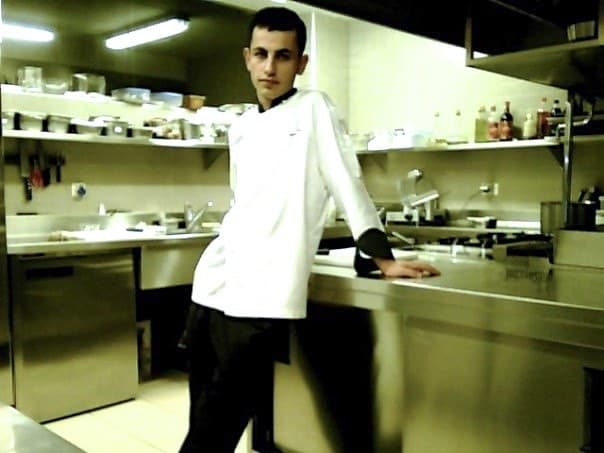
The Bentley's kitchen, Nişantaşı — Istanbul, 2008. 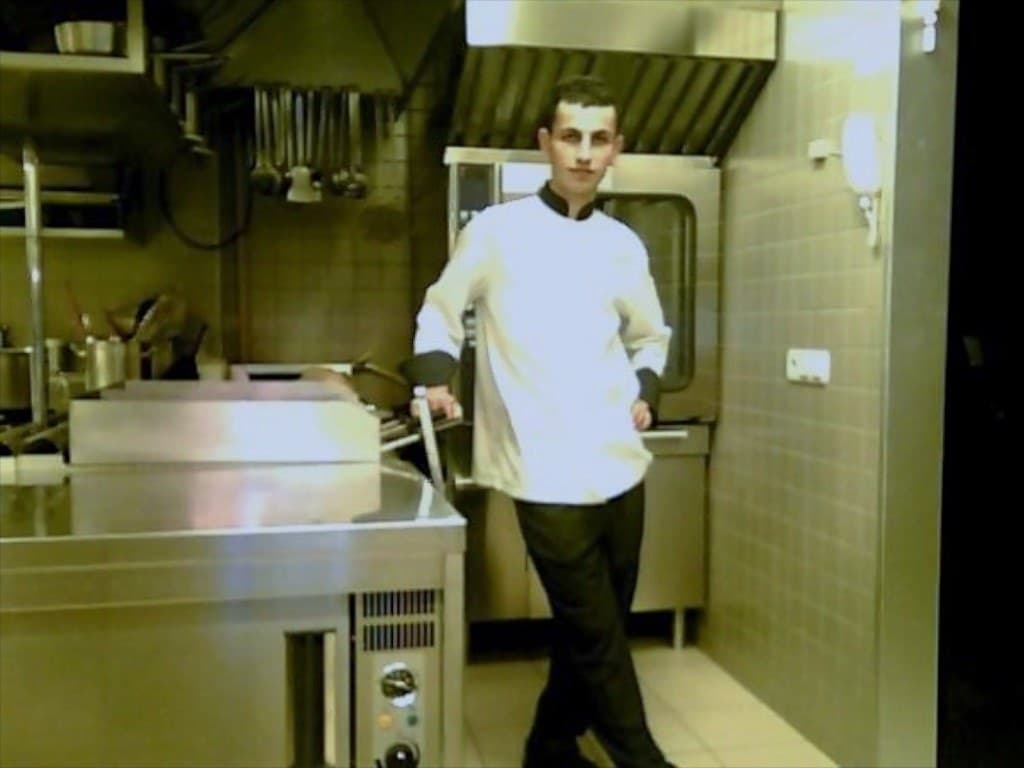
Istanbul, 2008.
A year that became a life
A work-and-travel year in the United States was supposed to be exactly one year. It wasn't enough. He came back for good in 2009 and made Pittsburgh home — then spent a long stretch away from cooking, driving taxi and rideshare, with a short restaurant stint in Houston, before finding the way back to a kitchen of his own.
2021 — the counter on 6th Street
He opened Sultan Döner with his wife Fatma, a few doors from the Cultural District theatres: döner stacked, spun and shaved by hand, and Fatma's Gaziantep family recipes across the rest of the menu — the dolma, the mezze, the things you'd be given as a guest. A year in, the Post-Gazette's dining critic named it the best Turkish cooking in the region.
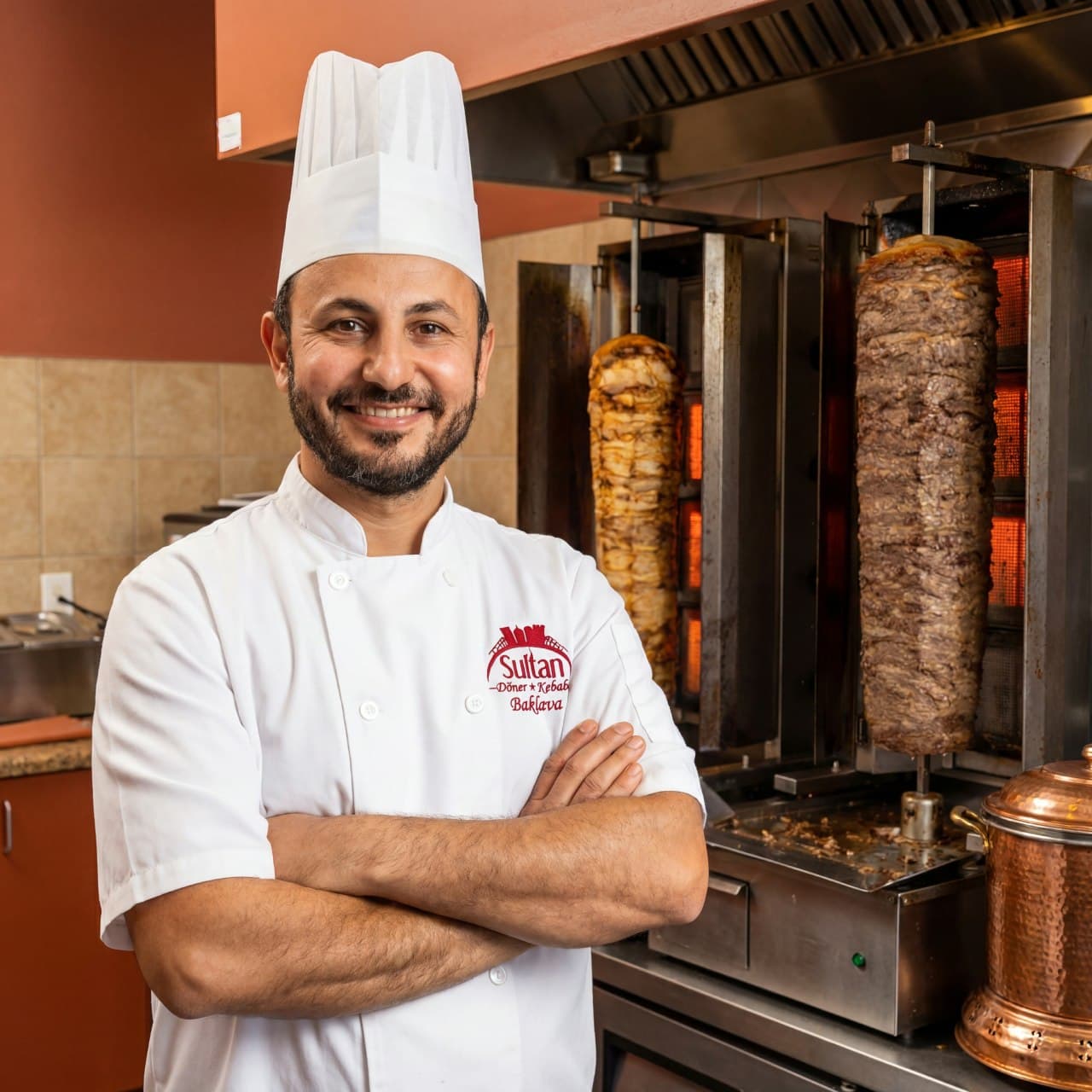
At the spits, 133 6th Street.
2019 — two weeks of nights
Baklava from start to finish had been the ambition for years. On a trip home in 2019 he arranged to work in a bakery, taking the overnight shift for two weeks and sightseeing with his family by day. What he came back with was less a recipe than a standard: every small step counts, and there is no step you can quietly drop.
“I should have been tired, but I didn't feel tired.”
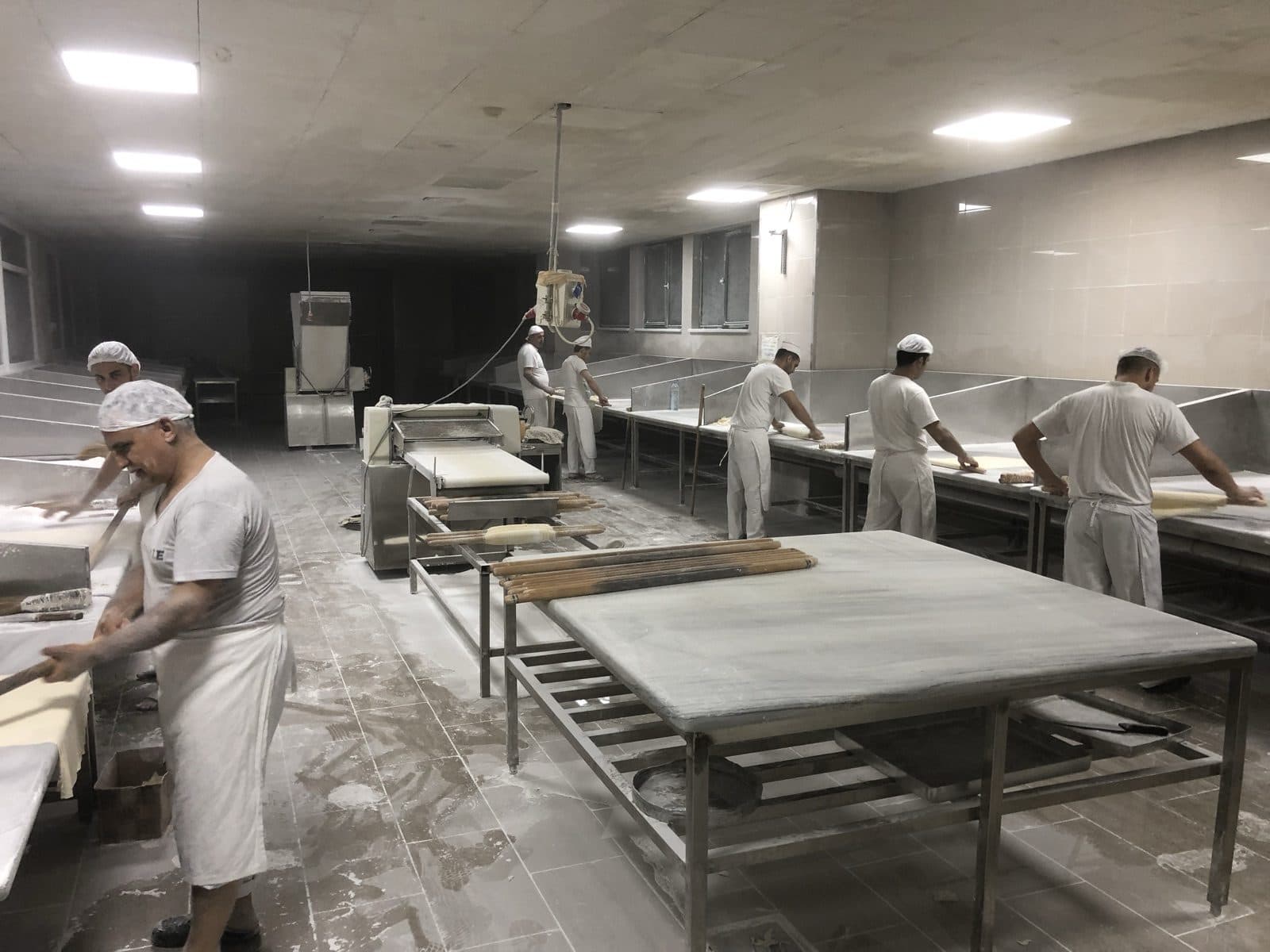
The bakery floor at 4:48 in the morning — July 2019. 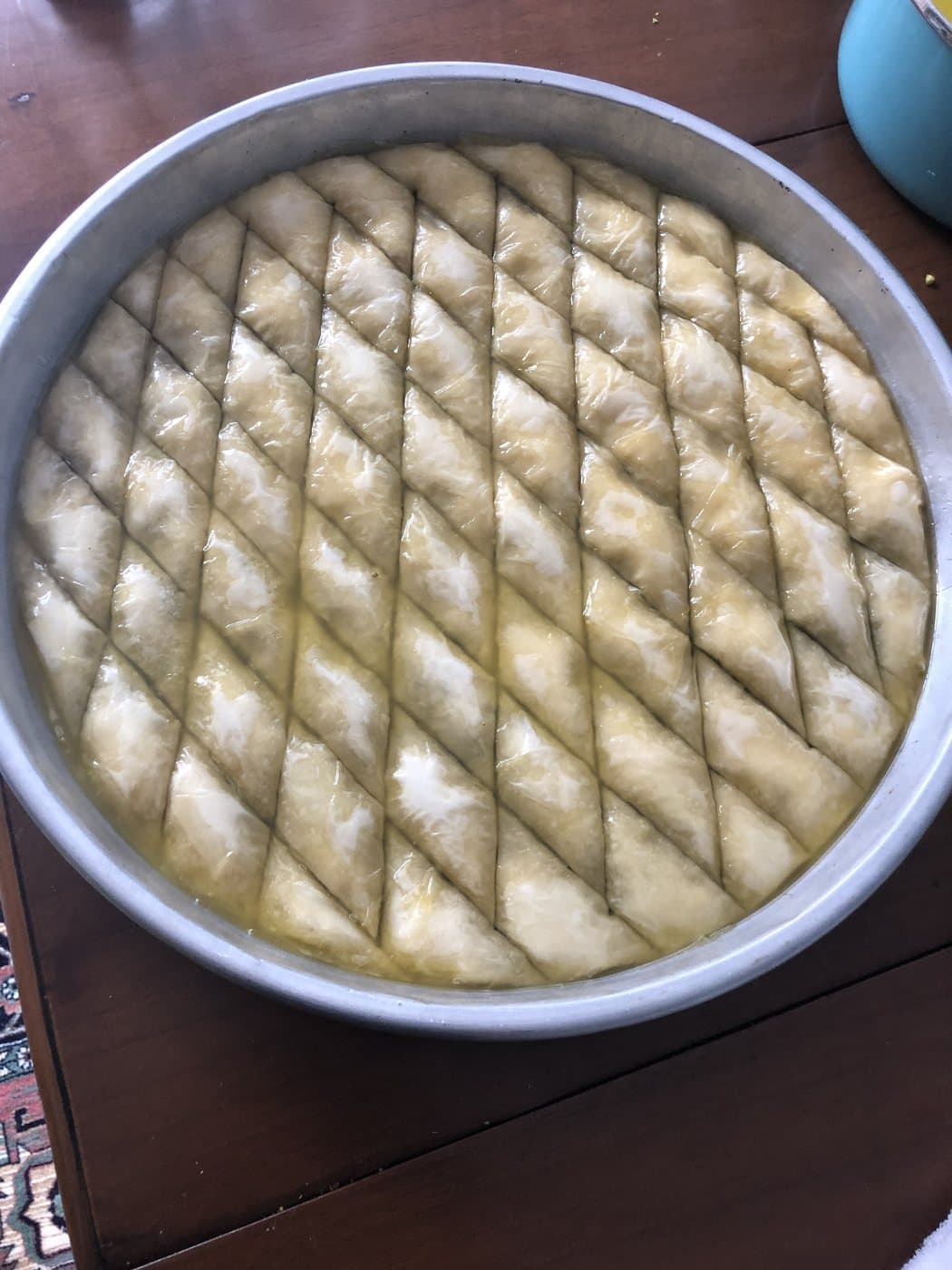
His first tray, scored and buttered — July 2019.
2020 — the year it didn't happen
The plan was to start the following year. The pandemic ended that, and the idea sat on a shelf while the restaurant survived. It took three more years to come back to it.
Late 2023 — the machine
Rather than take the profits out of a two-year-old restaurant, the Camozus put them back in. A phyllo-rolling machine came over from Türkiye — the back of the kitchen had to be rewired to run it — along with an Italian mixer, because the old Hobart couldn't bring flour, water, eggs and salt to the right consistency. Frozen phyllo dries out the moment it's unwrapped and never quite gets there. So none is used here. The sheets come off the roller nearly transparent.
The ingredients, the hard way
The flour comes from a mill that grows wheat specifically for phyllo, shipped direct because Turkish rules don't permit a third party to wholesale it. The pistachios are grown by a collective of farmers in southern Türkiye — one grove belongs to Fatma's family — and picked earlier than snacking pistachios, which is what makes them creamy and aromatic rather than merely salty. Every box is opened and inspected by US Customs on the way in. All of it costs more than what a supplier here would sell.
“You can see the difference. You can taste the difference.”
The build
Eighteen sheets go down, then a weighed measure of nuts, then nine more, then a final five that have to be laid perfectly. Ladles of clarified butter from a crock kept ready all day — as the chef says, the king. A wedge-shaped knife that crimps the edges as it cuts, so the top layers puff and crisp. A deck oven, for heat that moves evenly. Then syrup — four parts sugar to one water, lemon in at the boil — poured over the instant the tray comes out. Hot on hot, so every layer takes it up.
Apple pie, in phyllo
The apple is the one piece on the menu that exists nowhere in Türkiye. It is his own — invented here, and now the one that outsells everything else in the case.
“I came to Pittsburgh eighteen years ago with baklava in my hands and no idea I'd fall in love with apple pie. Cinnamon, apples, butter. It felt like home in a different language. So I put it between forty layers of phyllo. Turkish technique, American heart. It's the piece people come back for.”
— Chef SultanWhich brings you here
The last thing Sinan said in that 2024 interview was that he wanted to grow this until he could ship it across the country. This website is that — 6 varieties, boxed by hand on 6th Street and sent out fresh.
“I knew I could make it better. I knew I could make it special.”
— Sinan Camozu, to the Pittsburgh Post-Gazette, 2024
Taste the difference the long way makes
6 varieties, boxed by hand the day they go out. Build a box and see whether the extra work shows up on the plate.
Build a box